Past simple and past verbs

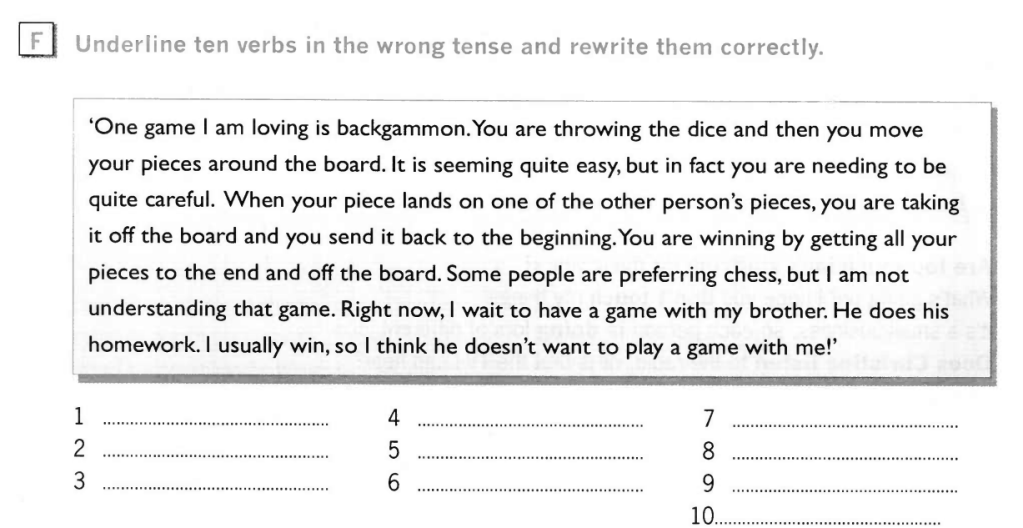
One game that I love is backgammon. You throw the dice and then you move your pieces around the board. It seems quite easy, but in fact you need to be quite careful. When your piece lands on one of the other person’s pieces, you take it from it off the board and you send it back to the beginning. You win by getting all your pieces to the end and off the board. Some people prefer chess, but I don’t understand that game. Right now, I am waiting to have a game with my brother. He is doing his homework. I usually win, so I think he doesn’t want to play a game with me!

English

Superlative adjectives

  1. Complete with a superlative adjective and all the necessary words.
  2. London is the largest (large) city in England.
  3. Cheetahs are the fastest (fast) animals in the world.
  4. Whales are the biggest (big) animals.
  5. San Francisco is the most beautiful (beautiful) city in the United States.
  6. Summer is the best (good) season of the year.

Write the superlative form.

  1. good the best. 6. pretty the prettiest
  2. far the fastest 7. small the smallest
  3. expensive the most expensive 8. nice the nicest
  4. old the oldest 9. comfortable the most comfortable
  5. young the youngest 10. bad the worst
  6. Look at the table and write true sentences with the adjectives in the box.
    James Anne Carol
    Age 34 35 28
    Height 1.80 m 1.75 m 1.72 m
    Weight 82 kg 85 kg 65 kg
    Savings 5,350 euro 5,500 euro 6,000 euro
    Old young light heavy tall short rich poor
  7. (age) Anne is the oldest.
  8. (age) Carol is the youngest.
  9. (height) James is the tallest.
  10. (height) Carol is the shortest.
  11. (weight) Anne is the fattest.
  12. (weight) Carol is the thinnest.
  13. (savings) Carol is the richest.
  14. (savings) James is the poorest.

  1. Write the opposites.
  2. happiest unhappiest 5. best worst
  3. most comfortable most uncomfortable 6. nearest farest
  4. easiest hardest 6. most expensive most cheapest

Comparison of adjectives, adverbs of manner
E Circle the correct word.

1 The dog is eating hungry / hungrily .
2 Is she drinking the hot coffee slow / slowly?
3 Sue is a nice / nicely person.
4 Tom plays tennis good / well.
5 The music was very loud / loudly.
6 The old lady spoke soft / softly.
A Complete the sentences with the correct comparative form of the adjective in brackets.
1 An elephant is stronger than (strong) a kangaroo.
2 Our teacher is more beautiful (beautiful) that film star.
3 A school is noisier than (noisy) a hospital.
4 Jane’s hair is longer than (long) yours.
5 John’s work is better than (good) Mary’s.
6 Yesterday was hotter than (hot) today.
7 This book is more interesting than (interesting) that one.
8 Athletes are usually more famous than (famous) scientists.
B Write sentences about the pictures. Use the superlative form of the adjective.
1 the girl / tall / of the three ……………………………………………………………………………………………………
2 the pyramid / ancient / of the three ……………………………………………………………………………………..
3 this athlete / good / athlete in the world ………………………………………………………………………………
4 February / short / month / in the year ……………………………………………………………………………………
5 the red apple / sweet / apple in the bowl …………………………………………………………………………….
C Circle the correct word.
1 I think Albert Einstein was the brilliant / more brilliant / most brilliant scientist in the world.
2 I am a good / better / best swimmer than my brother.
3 Mum is the busy / busier / busiest person in the family.
4 What is the most expensive / more expensive / expensive car in the world?
5 London is rainy / rainier / rainiest than Athens.
6 The book was frightening / more frightening / most frightening than the film.

English

  • The war  will be declared next week (DECLARE).
  • Your homework  must be finished by tomorrow afternoon. (MUST FINISH)
  • That house hasn’t been painted since I was a child. (NOT PAINT)
  • Smoking isn’t allowed in this hotel (NOT ALLOW)
  • After all the flights got cancelled the tourists checked in at the airport hotel.(CANCEL)
  • The car is not washed for over a week (NOT WASH).
  • He gave a new contract last year (GIVE)
  • This song was written by the Beatles in 1967. (WRITE)
  • The earth can be save if we try hard enough to do something (CAN SAVE)
  • The new bridge is being build at the moment. (BUILD)

  • They check every passenger.
    Every passenger is checked.
  • The women clean the school every day.
    The school is cleaned every day.
  • Somebody has collected this garbage.
    This garbage has been collected.
  • The police caught the criminals.
    The criminals were caught by the police.
  • They should stop vandalism in big cities.
    Vandalism in big cities should be stopped.
  • They must turn off the lights.
    The lights must be turned off.
  • The manager will write a report at the end of the month.
    A report will be written at the end of the month.
  • Do they paint this house every year?
    Is this house painted every year?
  • They are repairing my car now.
    My car is being repaired now.
  • How do they make butter?
    How is butter made?
  • Nobody has spoken French here for a long time.
    French has not been spoken here for a long time.
  • Patrick opened the store at 9 o’clock.
    The store was opened at 9 o’clock.

English

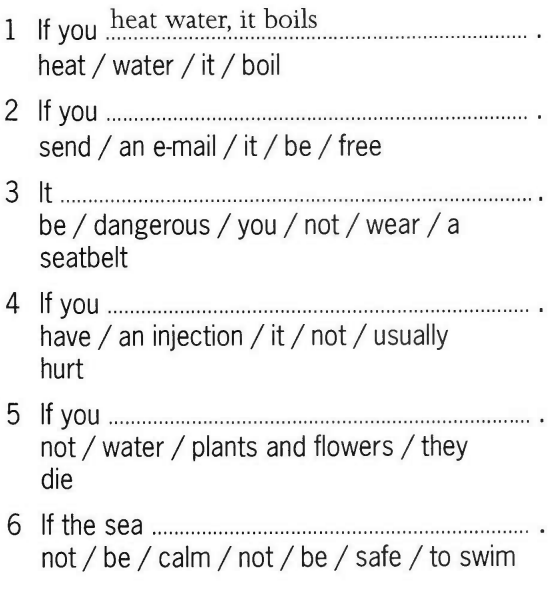
2. Send an e-mail it is free.

3. It will be dangerous if you want wear a seatbelt.

4.If you will have an injection it isn’t usually hurt.

5. If you isn’t water plants and flowers they die.

6.If the sea isn’t calm it isn’t safe to swim.

English

  1. Read the text and answer the questions following it.

Chinese New Year is the celebration of the New Year in Chinese communities around the world. The date of the Chinese New Year is determined by the lunar calendar, so festivities begin with the new cycle of the moon that falls between January 21 and February 19. Each year is named for one of 12 symbolic animals in sequence. The animals are: the rat, ox, tiger, hare, dragon, serpent, horse, ram, monkey, rooster, dog and boar. The New Year celebration is the most important and the longest of all Chinese festivals, traditionally lasting for two weeks. During the period, towns and villages are decorated with colored lanterns, floral exhibitions, and brightly colored banners with New Year greetings. Preparations traditionally began in the home the week before the New Year, when families thoroughly clean their houses to symbolically sweep away all traces of misfortune. They also pay of debts, add a new coat of red paint to doors and windowpanes, and decorate the home with flowers. To avoid bad luck, parents warn their children to be on their best behaviour. On the evening before the New Year, families gather for a feast of various dishes of seafood and dumplings. Each dish has symbolic meaning, often signifying good luck and prosperity. At midnight, families light fireworks to attract the attention of benevolent god and to frighten away evils spirits. The fireworks last until dawn, although celebrants may light more fireworks for the next two weeks.

  1. How is the date of the Chinese New Year determined? They determine the date by the lunar calendar.

2. When do festivities begin? The festivities begin from January 21 to February 19.

3. Why do families light fireworks? Because they think that firework will attract the attention of god and frighten away evils spirits.

4. The word various is synonymous to many.

2. Write the verbs in the right tense form.

After I had lunch at a village inn, I (1) looked for my bag. (to look) (2). I left it on the chair beside the door but it wasn’t there! (to leave). As I (3) was looking for it, the inn-keeper came in. (to look for)

“Did you have a good meal?” he asked.

“Yes, thank you. ” I answered, ” but I can’t pay the bill. I haven’t got my bag. “

The inn-keeper (4) smiled and immediately went out. (to smile). in a few minutes he returned with my bag and (5) gave it back to me. (to give)

“I am sorry, ” he said. My dog had taken in into the garden. He often does this”.

3. Translate the sentences form Armenian into English.

  1. Եթե մենք նրան չօգնենք, նա չի կարողանա ավարտել աշխատանքը-If we don’t help him he can’t finish his work.
  2. Թոմն ասաց, որ նա չի կարող ընդունել մեր առաջարկը-Tom said, that he couldn’t accept our suggestion.
  3. Ջորջը նկատեց, որ անձրևանոցը մոռացել է տանը-George noticed that he had left umbrella at home.
  4. Տնօրենն ասաց, որ փաստաթղթերը պատրաստ կլինեն ժամը 3-ին-The director said, that the documents would be ready at 3 o’clock.
  5. Երբ ես խոսեցի նրա հետ, նա շատ բարկացած էր-When I talked to him, he was very angry.
English

  1. Read the text and answer the questions following it.

Chinese New Year is the celebration of the New Year in Chinese communities around the world. The date of the Chinese New Year is determined by the lunar calendar, so festivities begin with the new cycle of the moon that falls between January 21 and February 19. Each year is named for one of 12 symbolic animals in sequence. The animals are: the rat, ox, tiger, hare, dragon, serpent, horse, ram, monkey, rooster, dog and boar. The New Year celebration is the most important and the longest of all Chinese festivals, traditionally lasting for two weeks. During the period, towns and villages are decorated with colored lanterns, floral exhibitions, and brightly colored banners with New Year greetings. Preparations traditionally began in the home the week before the New Year, when families thoroughly clean their houses to symbolically sweep away all traces of misfortune. They also pay of debts, add a new coat of red paint to doors and windowpanes, and decorate the home with flowers. To avoid bad luck, parents warn their children to be on their best behaviour. On the evening before the New Year, families gather for a feast of various dishes of seafood and dumplings. Each dish has symbolic meaning, often signifying good luck and prosperity. At midnight, families light fireworks to attract the attention of benevolent god and to frighten away evils spirits. The fireworks last until dawn, although celebrants may light more fireworks for the next two weeks.

  1. How is the date of the Chinese New Year determined?

2. When do festivities begin?

3. Why do families light fireworks?

4. The word various is synonymous to ...

2. Write the verbs in the right tense form.

After I had lunch at a village inn, I (1) … for my bag. (to look) (2). I … it on the chair beside the door but it wasn’t there! (to leave). As I (3) … it, the inn-keeper came in. (to look for)

“Did you have a good meal?” he asked.

“Yes, thank you. ” I answered, ” but I can’t pay the bill. I haven’t got my bag. “

The inn-keeper (4) … and immediately went out. (to smile). in a few minutes he returned with my bag and (5) … it back to me. (to give)

“I am sorry, ” he said. My dog had taken in into the garden. He often does this”.

3. Translate the sentences form Armenian into English.

  1. Եթե մենք նրան չօգնենք, նա չի կարողանա ավարտել աշխատանքը։
  2. Թոմն ասաց, որ նա չի կարող ընդունել մեր առաջարկը։
  3. Ջորջը նկատեց, որ անձրևանոցը մոռացել է տանը։
  4. Տնօրենն ասաց, որ փաստաթղթերը պատրաստ կլինեն ժամը 3-ին։
  5. Երբ ես խոսեցի նրա հետ, նա շատ բարկացած էր։

4. Speak on the following topic.

Passive voice

1) Somebody found the key.
[ . ]
The key was found by somebody.
2) Somebody made mistakes.
[ . ]
The mistakes were made by somebody
3) Somebody loved that woman.
[ . ]
That woman was loved by somebody.
4) Somebody cleaned the rooms.
[ . ]
The rooms were cleaned by somebody.
5) Somebody fixed the computer.
[ . ]
The computer was fixed by somebody.
6) Somebody built that house.
[ . ]
That house was built by somebody.
7) Somebody wrote War and Peace.
[ . ]
The War and peace was written by somebody.
8) Somebody painted The Mona Lisa.
[ . ]
The Mona Lisa was painted by somebody.
9) Somebody stole my wallet.
[ . ]
The somebody was stolen my wallet.
10) Somebody prepared lunch.
[ . ]
Lunch was prepared by somebody.
11) Somebody drank a lot of coffee.
[ . ]
A lot of coffee was drank by somebody.
12) Somebody forgot the papers.
[ . ]
The papers were forgotten by somebody.
13) Somebody closed the windows.
[ . ]
Windows were closed by somebody.
14) Somebody invited Julie and Luke to a party.
[ . ]
Julie and Luke were invited to a party by somebody.
15) Somebody built a website.
[ . ]
The Website was built by somebody
16) Somebody ate all the cakes.
[ . ]
All the cakes were eaten by somebody.
17) Somebody told me to wait.
[ . ]
I was told to wait by somebody.
18) Somebody employed a lot of new waiters.
[ . ]
A lot of new waiters was employed by somebody.
19) Somebody opened a shop.
[ . ]
A shop was opened by somebody.
20) Somebody lost the letter.
[ . ]
The letter was lost by somebody.
  1. Mr Jones watches films-The films were watched by Mr Jones.
    .
  2. The people speak English.-The English is spoken by people.
    .
  3. He reads comics. –The comics was read by him.
    .
  4. We play volleyball. Vollleyball was played by us.
    .
  5. They sing the song. The song was sung by them.
    .
  6. I take photos. The photos are taken by me.
    .
  7. She does the housework. –The housework was was done by her.
    .
  8. The policemen help the children.-The children are helped by policeman.
    .
  9. He writes poems.-Poems was written by him.
    .
  10. Mother waters the flowers.-The flowers are watered by mother.